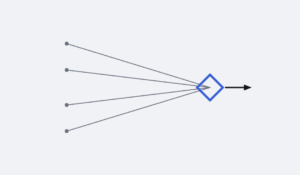

Almost every conversation about AI repeats one word: speed. Faster writing, faster code, faster reports, faster decisions. But speed alone cannot be a goal, because accelerating in the wrong direction can do more damage than moving slowly in the right one. This is exactly where the efficiency trap begins: producing fast and producing right are not the same thing.
Where speed is visible and accuracy is not
Measuring speed in a business is easy: how many emails were sent, how many reports were prepared, how many pieces of content were published. These numbers are concrete, reportable and easy to present to management. Measuring accuracy is much harder: whether the email carried the right message, whether the report supported the right decision, whether the content reached the right audience... Most of this only becomes clear weeks or months later.
This difference in measurability leads businesses to focus on speed without realizing it, because speed offers a success metric that is easy to show. AI strengthens this tendency further: far more can now be produced in far less time. But the time available to check whether what is produced is right does not grow at the same pace.
The cost of fast but wrong
Something wrong produced quickly is more dangerous than something wrong produced slowly, because it spreads more widely in less time. One wrong proposal sent to a customer is a problem. A hundred different proposals sent to a hundred customers in a week, all built on the same flawed logic thanks to AI, is a much bigger one. Speed multiplies the impact of a mistake.
That is why, when working with AI, you need to strengthen your control mechanisms in proportion to the increase in production speed. Otherwise you become a system that simply makes mistakes faster, which is a far worse outcome than the old system that worked slowly but correctly.
How do you measure accuracy
Measuring accuracy is harder than measuring speed, but not impossible. The first step is to clearly define “what counts as success for this work” before you begin. For a piece of marketing content, the question should not be “was it published” but “did it get the expected engagement from the target audience”. For a customer proposal, it should not be “was it sent” but “did it accurately reflect the customer's need”.
The second step is to shorten the feedback loop: the sooner you learn whether an output works, the sooner you can fix it. Using the speed advantage of AI not only for production but also to accelerate this feedback loop is one of the most practical ways to avoid the efficiency trap.
An example: content production
With AI you can produce dozens of blog posts, social media posts and email campaigns in a week. That is impressive speed. But if none of that content reaches the right audience with the right message, all you have is volume, not value. Ten pieces of content that hit their target are always worth more than a hundred that miss.
This is a point often overlooked in content production: the metric that really matters is not “how much we produce” but “how much of it works”. AI makes volume easier; it does not make accuracy easier. Accuracy is still the result of strategic thinking, understanding the audience and choosing the right message.
Does this mean slowing down
No. It is not about rejecting speed but about directing it to the right place. It means spending the time AI saves on checking the accuracy of what is produced, sharpening the strategy and understanding the audience better, instead of inflating production volume. That is the way out of the efficiency trap. Speed is not the enemy of accuracy; managed well, it can be accuracy's greatest ally.
Businesses that manage this use AI in two layers: one layer for fast production, the other for evaluating and improving that production. Without the second layer, the first simply multiplies mistakes faster.
Conclusion
Producing faster with AI is possible, but speed alone is not a measure of success. The real question is whether what is produced is right, and answering that question is still your job, not AI's. The way to avoid the efficiency trap is to keep measuring accuracy while you increase speed.